
Every month, millions of people open their credit card statements, look at the "Minimum Payment Due" box, and feel a sense of relief. "I can afford that," they think.
But that small number is not a helpful suggestion. It is a mathematically engineered trap.
If you've ever felt like your debt never goes down despite making payments every month, you aren't imagining it. Here is the hidden math behind why the "Minimum Payment" system exists—and how you can break free.
1. The "Interest + 1%" Rule
Banks don't set minimum payments to help you get debt-free. They set them to keep you "current" while maximizing their interest collection.
Most credit card companies use a formula that looks like this: [Monthly Interest] + [1% of the total balance]=Minimum Payment
This means that out of a $300 payment, $200 might be pure interest. Only $100 actually touches your debt. By keeping the principal reduction so low, the bank ensures that you stay in debt for 20 to 30 years for a single purchase.
The "Negative Amortization" Nightmare
In some extreme cases, banks set the payment so low that it doesn't even cover the interest. This is called Negative Amortization. When this happens, your balance actually increases every month even though you are making your payments on time. This is the ultimate debt trap, and our calculator is designed to flag this immediately with a red "Health Badge."
2. Psychological Anchoring
In behavioral science, "anchoring" is a cognitive bias where we rely too heavily on the first piece of information offered.
Banks know that by putting the "Minimum Payment" in a big, clear box, your brain subconsciously treats it as the "Correct" or "Recommended" amount. Even if you have an extra $50 in your budget, the "anchor" makes you feel like you've already done your duty by paying the minimum.
3. The Reverse Compound Interest Effect
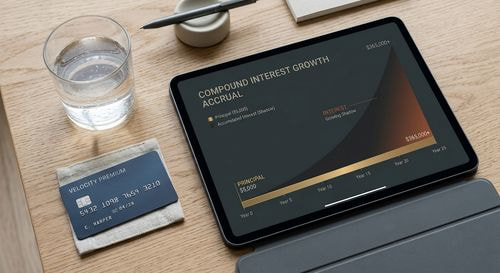
Debt is simply compound interest working against you. When you pay only the minimum, you are allowing the interest to grow almost as fast as you are paying it off.
However, adding even a small amount—like $25 or $50 extra—breaks this cycle. Because extra payments go 100% to the principal, they reduce the base that the bank can charge interest on next month. It’s like a "snowball" that gains speed in your favor.
4. How to Beat the Trap
Knowing the secret is the first step. Beating it is the second.
- Stop Looking at the Minimum: Ignore the suggested amount. Instead, look at your budget and decide the maximum you can pay.
- Use a Payoff Calculator: Don't guess. Use a tool like our Debt Payoff Calculator to see the exact day you'll be free.
- Prioritize High Interest: Use the Debt Avalanche method to attack the 20%+ APR cards first. This is the fastest way to stop the interest drain.

Bottom Line: The minimum payment isn't there to help you. It's there to help the bank's profit margin. By paying even a small amount extra, you are effectively taking that profit back for yourself.